About the Clear-Eyed Way
The Unborn is the center.
The Clear-Eyed Way of Unborn Zen is an independent philosophical project exploring Bankei’s recorded teachings and their usefulness in ordinary life. Reading, reflection, and everyday practice are freely available to people of any religion, creed, or none.
What this work offers
Free study. Everyday practice.
This is a nonreligious project for philosophical study and everyday reflection on Bankei and Zen. It has no religious membership or shared creed. It is not an educational institution and is not accredited by any body, anywhere.
There is no graduation, degree, qualification, or certificate to earn here. The numbered steps organize the reading; they do not measure understanding or confer spiritual standing.
We explore the possibility of freedom from mental anguish in ordinary life. Bankei’s starting point was the Unborn Buddha-mind already present. Thoughts and feelings can arise without being taken up as an identity or carried into harmful action. Practice here means exploring how to leave that entanglement alone and meet the next person, task, or difficulty with clarity and care. These are ways of living from what is already here.
Our application of Bankei’s teaching in “Listen carefully,” translated by Peter Haskel.
What we stand for
Our way.
Begin with what is already here. Bring it into the whole of your life.
These are our commitments, expressed in our own words.
Begin with the Unborn.
Bankei taught that the Unborn Buddha-mind is already present in each of us. We explore what that means in experience: a thought or feeling can arise without becoming an identity, a grievance, or a position we have to defend.
Let Bankei lead.
Bankei’s recorded words are the starting point of this philosophical study. We read them, question our interpretations, and ask how they speak to the life before us. You are free to consider his ideas for yourself.
Know the roots.
Bankei was a Buddhist Zen teacher. The Buddha and the wider Buddhist tradition give his thought its history and language. We study that context respectfully while approaching his ideas philosophically, with no religious identity or profession of belief required.
Live today.
There is a meal to enjoy, work to do, someone to care for. We explore how Bankei’s ideas can help us meet that life with less mental anguish. Kindness, honest speech, and repairing harm give reflection a place in ordinary conduct.
Meet as equals.
Each of us can listen, offer friendship, and share what helps. Tesshin claims no religious or spiritual authority. Bring questions, keep your judgment, and leave others free to do the same.
People of any religion, creed, or none are welcome. Read, reflect, try an exercise, or offer a friend your attention. You can explore Bankei’s thought while keeping your own convictions and judgment.
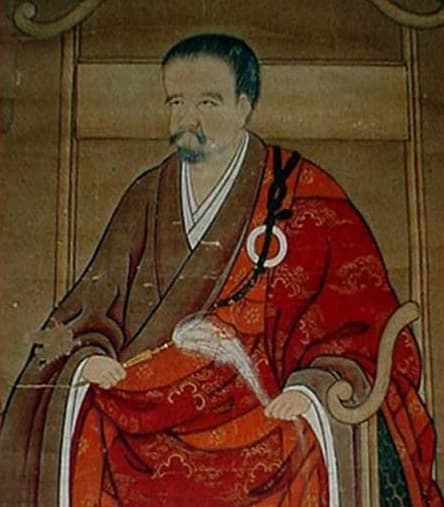

Bankei Yotaku · 1622–1693
Why “Clear-Eyed.”
Bankei was a seventeenth-century Japanese Rinzai Zen master who became known for speaking plainly to monks, nuns, laypeople, farmers, officials, grieving people, angry people, and ordinary people who came to hear the Dharma. His teaching was startlingly direct: the Buddha-mind is unborn, already functioning, already hearing, already able to distinguish things before a self is made around them.
“Clear-Eyed” in our name comes from Bankei’s own recorded teaching. In “Listen carefully,” he connects the Clear-Eyed School with realizing the Unborn Buddha-mind and the clear seeing that follows. Peter Haskel’s translation records him saying:
“…that’s why my school is called the Clear-Eyed School.”
Bankei · Bankei Zen, “Listen carefully”, translated by Peter Haskel. Read the passage in Grove Atlantic’s authorized excerpt.We call this work The Clear-Eyed Way of Unborn Zen to acknowledge that source. “Way” names an approach to living from the teaching: return to Bankei’s words, explore what they point to, and consider how understanding might show up in daily life. The name acknowledges a philosophical inspiration. It makes no claim of institutional succession, Dharma transmission, or authorization from Bankei’s surviving temples.
Our explanations and exercises are our own applications. We distinguish them from Bankei’s recorded words so you can read the sources, question our interpretation, and find what is useful.
Read Bankei’s recorded teachingA note from Tesshin
A student of Bankei.
I’m Tesshin, and I’m Jewish. I am not a Buddhist, and I don’t belong to a temple or Zen center. I served in the Army and found Bankei’s teaching after about a decade of service. I study and apply his recorded teachings because they have helped me, and this site shares what I’ve found useful in plain language.
Anyone, of any religion, creed, or none, can explore Bankei’s thought and what it offers for freedom from mental anguish. I claim no religious or spiritual authority. I hold no ordination, Dharma transmission, or lineage. My explanations are personal interpretations and applications, open to questions and correction.
Tesshin (鉄心), “iron will” in Japanese, is an alias I chose for this work. It is a personal homage to Bankei’s relentless search for “bright virtue,” which led him to his realization of the Unborn. I chose the name myself; it is not a religious title or a name conferred by a teacher.
Contact
Write to us.
For questions about the site, suggested corrections, or general correspondence, email us.